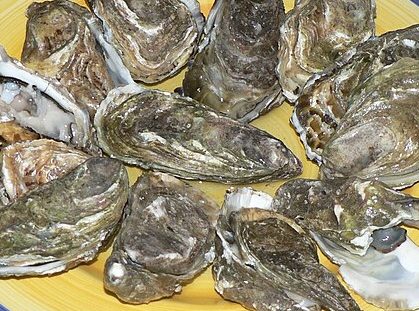
January 1, 2026 marks the first time oyster fishers will commercially access Apalachicola Bay on the Western Gulf of Florida since December 2020.
The Florida Fish and Wildlife Conservation Commission (FWC) ended fishing license application on December 16, 2025 after a November 10 start.
As reflection of conservation measures for the flailing resource, the FWC even included an online course for fishing applicants.
245 fishing permits are available via a lottery process, with winners capable of harvesting up to 1 bag (60 pounds) per daily allocation.
Allocation means the reef where fishers will be assigned – and the timeline can change depending on the FWC’s authorization.
The season will run between January 1 and February 28, 2026 on four reefs that have met minimum stock requirements.
Restored reefs including Peanut Ridge, Cat Point Spur, Easthole and NFWF Cat Point have all met population threshold of 400 oyster bags an acre.
Easthole reef enjoys the biggest harvest allocation total of 115 bags while Cat Point Spur trails at 24 bags for the two-month season.
Oyster Reef Harvest Restoration Finds Holiday Market Offers
The restoration of Florida’s reefs coincides with a festive mood elsewhere in the United States, with oysters prices trimming.
In Boston, for instance, Summer Shack was offering a promotional $2 for an undisclosed amount of oysters daily starting mid-December.
The throwaway offer mainly covers bivalves in brine, the fluid that keeps the processed critters in fresh condition.
In Florida itself, supplies could increase and hence affordability since the FWC plans to restore some 2,000 water acres before 2032.
By March 2025, 38 acres constituting Cat Point, Easthole and Peanut Ridge reefs had undergone full restoration.
Research and reef reinstatement funds emanated from Triumph Gulf Inc. (via the Deepwater Horizon oil spill settlement), the state university and the Pew Charitable Trusts.
Western Florida’s reefs had begun degrading in 2013, leading to low stock and hence the harvest ban 7 years later. The reopening schedule in May 2025 found about 80% of statewide oyster reefs depopulated. Apalachicola alone used to supply the bulk of state oyster landings before its reef decline, which is the topic of the stats below.
Apalachicola Oyster Reef Restoration Statistics
Northwest Florida’s Apalachicola Bay used to supply 90% of the statewide oyster catch before 2013. This marked the year when degrading oyster reefs started, leading to reef losses of up to 95% till 2025. The oyster population plunged as a consequence and forced the closure of the fishery between December 2020 and December 2025. When fishing applications for the reopening season on January 1, 2026 were on course, the state government was requesting $30 million to fund 2026-27 restoration. Out of this kitty, $25 million would go to the continuing reinstatement of Apalachicola Bay.
How has the Bay’s reef restoration occurred?
After environmental factors and an oil spill on the Gulf of Mexico caused reef degradation in the early 2010s, attention turned to restoration. The Deepwater Horizon oil settlement gave $199 million to Gulf of Mexico states for the cause. Between 2015 and 2023, 100,000 cubic meters of limestone and shells had restored a part of the Bay’s reef. Other measures included a 5-year closure of the fishery from December 2020 to allow the recovery of the oyster population.
What were the Bay’s oyster landing value before restoration?
In 2022 when restoration was only minimal at Apalachicola Bay, the fishery generated below $1 million. This is a trickle in comparison to the Bay’s returns in 2012 at above $9 million, per the Florida Fish and Wildlife Conservation Commission (FWC).