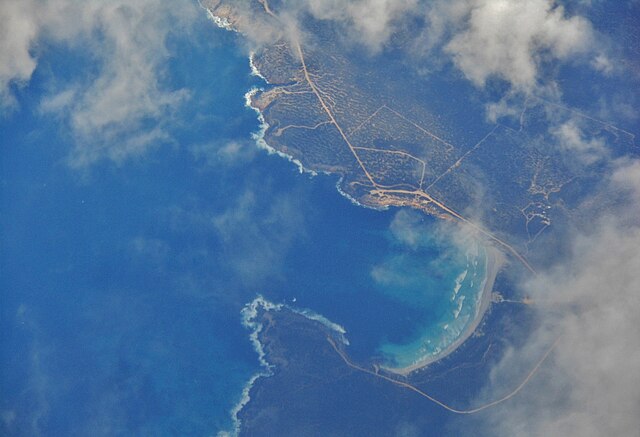
Deep sea fisheries spanning 900 km along the Western Australia (WA) coastline and metropolitan Perth have closed commercially to save demersal species.
The WA’s government stated on December 3, 2025 that the permanent ban aims to rejuvenate snapper, red emperor and dhufish species.
Provisionally, the Kalbarri-Perth metro-Augusta coastline remains permanently off limits for commercial fishers for the whole of December 2025.
Commercial harvesters will no longer fish here eventually but will enjoy a governmental license buyback worth A$20 million ($13.2 million).
Reacting to this surprise news, the WA Fishing Industry Council’s chief executive Melissa Haslam remarked the inadequacy of the buyback kitty.
“You’re talking over 70 license holders…$20 million, it would be laughable if it wasn’t serious” she told ABC.
Haslam opines that the common consumer will bear with fish price hikes or even never again enjoy eating certain species.
Apart from the total commercial ban on the Kalbarri-Augusta coastline, partial restrictions will take place on other coasts.
One of these is Perth, the capital of WA, but applicable only outside the metropolitan coast (already under the permanent commercial ban).
Perth’s exterior coast will attract 50% bag limit cuts for recreational fishers that use vessels, in force till September 2027.
After the southern spring 2027, the whole of the Perth and WA coast will turn into a recreational-only demersal fishery.
Northern/Southern Commercial Fishing Exceptions
Deep sea fisheries in the northern WA from Pilbara to Kimberley will have provisional 50% catch limits starting January 1, 2026.
A similar provision applies to the state’s South Coast, which geographically stretches for some 1,600 km.
Later on the provisional limit will transition into a permanent quota system that will depend on similar successes elsewhere.
One of these success stories is the Gascoyne coast in the state’s northwest. It is the only one without demersal fishing restrictions for what the Ministry of Fisheries calls “success of efforts.”
Meanwhile, WA’s west coast will have charter fishing limits of 25 tonnes annually for deep sea species, under the tag system.
The Perth metro coast however will not allow charter fishing for the remainder of this season.
Trawling (net dragging) remains under ban in the only commercially applicable coast (Pilbara), to protect dolphin entanglement.
This most notable change in Australia’s fishing history seeks to restock seriously depleted demersal biomass. The stats below follow up the sensitive issue with succinct biomass details.
Western Australia (WA) Deep Sea Fisheries Statistics
Western Australia may be famous for rock lobster worth A$750 million ($493.5 million) as of 2019, but it also hosts iconic demersal fish. These include groper, dhufish, snapper and others that comb the ocean floor. The Department of Primary Industries and Regional Development (DPIRD) estimates 3,000 fish species inhabit WA’s coast between 10ºS and 40ºS latitudes.
Some of these numerous species live deep in the sea but are fast depleting due to fishing efforts. As of early December 2025, the WA’s biomass (spawning stock) of demersals (northern/southern snapper and dhufish) was 20%. This indicates a depletion of 80% of the spawning biomass, per Perth Now, quoting the DPIRD.
In early December 2025, the government therefore permanently banned commercial fishing in some coasts.
What is the buyback and restocking package after the 2025 demersal ban in WA?
Following diverse fishing restrictions, the government announced on December 3, 2025 to restock demersal fish at A$29.2 million ($19.2 million). A part of this sum includes A$20 million ($13.2 million) to pay back displaced commercial fishers. Another A$1.9 million ($1.25 million) is for other recreational fishers while A$3.3 million ($2.17 million) for recreational boat tackle shops.
What is the demersal fish catch status in Western Australia?
The DPIRD finds commercial fishing effort (limit) for WA’s south and west coast demersal finfish at below 240 tonnes a year (2023). The department reported commercial catch for these deep sea species on these two coasts in 2023 at 282 tonnes, which is unacceptable. But it found the Gascoyne coast’s demersal snapfish limit acceptable at 48.3 tonnes (2023).