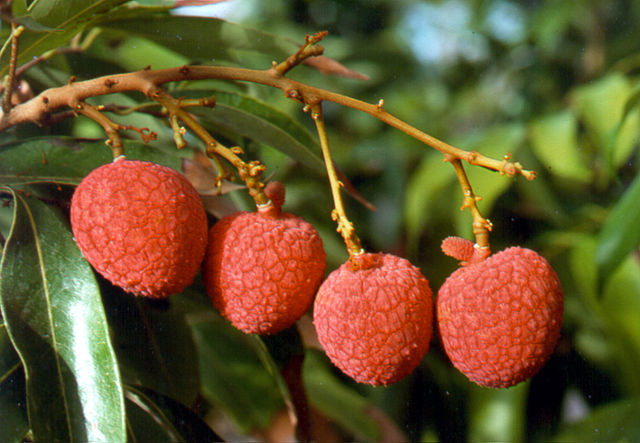
A year after China signed agreements that favored lychee imports from Vietnam, the cross-border Hekou port anticipates expansive 2025 trade.
Each early summer, the port receives thousands of tonnes of lychees from Vietnam. Back in May 2024 alone, 6,600 tonnes of the fruit passed via the harbor.
With its well-developed rail infrastructure and fast custom clearance, this southwestern China port facilitates expeditious trade.
Helping out is the streamlining of customs by the Sino-Vietnamese border administration, which reduces delays for perishable fruits.
FTA Perks
The gateway also enjoys the benefit of the ASEAN-China Free Trade Area (ACFTA), which promotes easy trade for lychees.
After a spree of agricultural trade agreements in 2024, lychees emerged among 11 tropical fruits from Vietnam that officially enter China.
Since that time, the Viet lychee has penetrated beyond the nearby Yunnan Province’s wholesale markets to mega cities like Shanghai.
World’s Biggest Market
Popular for its juiciness and sweetness, the red fruit has conquered the world’s biggest lychee producer and consumer market.
Despite being the number one producer, China has such a thirsting for the fruit that it imports from as far as Australia.
With such a huge market, analysts expect the 2025 season’s exports by Vietnam to be high. Preliminary production estimates are already at 165,000 tonnes, up from 87,320 tonnes in 2024.
According to Vietnam’s fruit export body, FOSACHA, 2024 generated 5.775 billion dong ($223,897) in all lychee revenue. Although just 24,785 tonnes out of the year’s output of 97,370 tonnes underwent export, China gobbled up the lion’s share.
So long Hekou port as it prepares for a May 2025 onslaught of even a bigger lychee crop than last year’s. And as the data section below shows, Vietnam can manage such an increase because it has upped production in recent decades.
Vietnam Lychee Statistics
The northern part of Vietnam is, along with mainland China, one of the geographical origin of lychees. Today, the fruit has extended outside the place of origin around Hanoi to other areas due to commercial cultivation. By 2022, the Viet lychee was under export to over 30 nations, with China the top importer.
How does Vietnam’s lychee production compare with China’s?
Vietnam is among the leading lychee-producing and-exporting nations but its output is way below global leader, China. For example, in the 1998-99 market year, Vietnam had an output of 27,000 tonnes versus China’s 950,000 tonnes. Vietnam’s lychees are popular in China, however, due to their taste and organic quality. The organic aspect gains from rising VietGAP-certified cultivation at 16,000 hectares or roughly half of the 2025 acreage.
What is the historical growth rate of Vietnam’s lychee industry?
The Vietnam lychee sector grew slowly in the 1980s but between 1992 and 1998 it expanded rapidly. By 1998, the cultivated area had risen to 25,000 hectares while production had upped to 27,000 tonnes. This according to the Food and Agriculture Organization (FAO). In 2024, acreage hit 29,700 hectares while production attained 97,320 tonnes, per the export agency FOSACHA. The agency’s predictions for 2025 is that production would reach 165,000 tonnes.
Which lychee varieties grow in Vietnam?
Hanoi and Ha Tay regions boast truly local cultivars such as Trang Cat and Yang Anh cultivars. Most lychee-growing provinces on the other hand grow Thiew Thanh Ha and Phu Ho as the main cultivars.