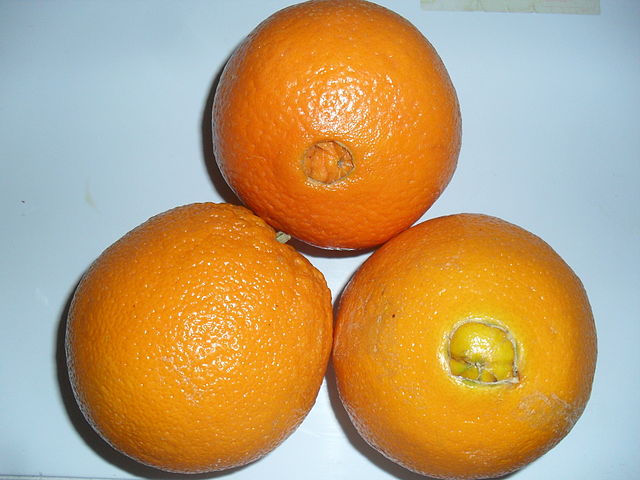
Plant Quarantine Authorities in Egypt and the Dominican Republic have okayed the export of citrus fruits from Egypt to the Caribbean nation.
Approval followed satisfactory inspections by a Dominican Republic phytosanitary delegation to Cairo in November 2025.
The two nations would then on January 12 officially push back the new export calendar to January 1, 2026.
Egypt will henceforth ship pomegranates, oranges, grapefruit and tangerines, after years of related citrus fruit peel trade with its bilateral partner.
The North African country last shipped $2.96 million worth of nuts, melons, edible fruits and citrus fruit peel to the island nation in 2024.
This indicates that a share of Cairo’s projected 2025-26 fresh orange exports at 1.9 million tonnes will reach its new trading partner.
High Potential at Destination Meets a Balanced Origin
Egypt has high hopes that its balanced production will meet seasonal demand by tourists who flock the pristine island destination each summer.
Although the Dominican Republic exports much citrus at $8.78 million (2023), it imports even more at $12.6 million, to satiate home demand.
Most of its imports emanate from regional origins such as continental United States, Chile, Peru, Colombia and Belize.
Egypt in turn enjoys patronage in Europe, the Middle East and Russia, with citrus the top fruit export to the European Union at 500,000 tonnes (2024).
Now that it is branching out exports to the Americas, Egypt will find shipping routes there closer than to east Asian markets.
There is also low-cost production of citrus, facilitating internationally appealing export prices suitable for the competitive Dominican Republic market.
Finally, there is balanced supply at origin: Egypt’s production starts in December for most citrus trees, ahead of the keynote Valencia oranges from mid-February.
Oranges such as navels and Valencia dominate production and represent 80% of exports ahead of tangerines (10%) and lemons (5.8%). Incidentally, lemons and oranges are important citrus categories in both the Dominican Republic and Egypt, per the below section.
Egypt and the Dominican Republic Citrus Statistics
Though worlds apart geographically, the Dominican Republic and Egypt grow similar citrus fruits like Valencia oranges and lemons. The two countries export a margin of their respective production and import the rest. While the Dominican Republic ranked 55th worldwide in citrus exports in 2023 at $8.78 million, Egypt was in the top echelons that year.
In terms of trade, Egypt exports up to $2.96 million in non-citrus fruits to the Dominican Republic, as of 2024. The Dominican Republic in turn imports around $12.6 million (2023) in citrus value from Latin American neighbors and the United States. A new citrus trade agreement with Egypt in January 2026 will branch out origins outside the Americas.
Regarding production, lemons lead the Dominican Republic’s citrus acreage at 330,000 tasks (33,000 hectares), as of 2024, according to the Latin American News. Total national citrus production was at 181,100 tonnes in 2021, the 48th highest worldwide. Initial projections meanwhile put 2026 output at 188,000 tonnes.
For Egypt, production and trade stats include the below takeaways:
- Export turnover of fresh oranges represents 20% of Egypt’s forex earnings, according to the USDA’s Foreign Agricultural Service (FAS).
- The FAS forecast Egypt’s orange production in 2025-26 at 4 million tonnes.
- National citrus fruit exports raked in $815.343 billion in 2022, the eighth highest globally – down from $854.966 billion in 2021.
- Egypt’s January-July 2023 citrus exports went on to be the highest globally at 4.65 million metric tonnes, according to the Ministry of Agriculture.
- Despite being a net exporter, Egypt also imported citrus worth $3.3 million from West Asia and Brazil in 2021.