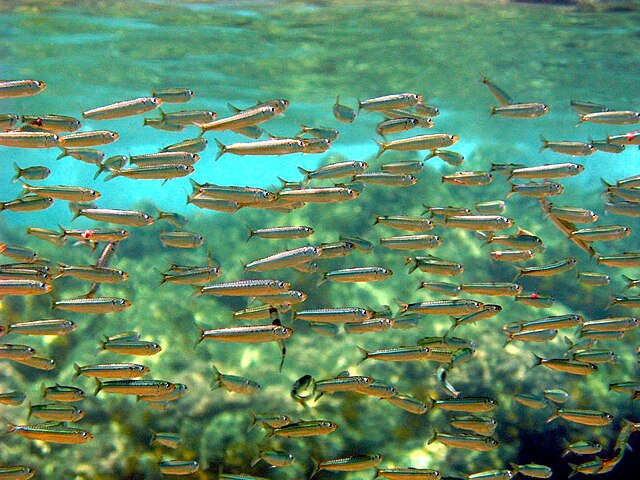
After a 3-year wait, the northeast Japan port of Choshi recaptured the top fishing port position in 2025, courtesy upscaling sardine landings.
Powered by a 60% rise in Northwest Pacific sardine catches, this Honshu island’s port saw its overall fish catches grow by 52% through 2025.
This effectively pushed aside the incumbent port of Kushiro on the island of Hokkaido, and the northern Aomori Prefecture with its record-breaking bluefin tuna.
Summer sardine landings in Choshi from June to September 2025 topped 70,000 tonnes and helped supplant weak cold water catches.
The increase marks a notable comeback from 2024’s poor non-sardine hauls due to warming ocean currents.
A Japan Metrological Agency report of March 2023 revealed surface temperatures at surrounding seas as having risen by 1.24ºC in a century. This was versus a 0.6ºC rise for the corresponding worldwide oceans.
Hence, southern species have been migrating northward, displacing cold water species like Pacific saury and bringing feed competition to tuna.
Luckily, the port receives both the warm Kuroshio ocean current and the cold Oyashio current that nurture nutrient-dense plankton diversity for various fish.
Iwashi Capital
All the same, iwashi or sardines proudly offload directly into sophisticated ice packaging factories, precipitating their fame as the freshest in Japan.
Due to its proximity to Tokyo at a 1-hour drive eastward, Choshi has made its fresh tuna commonplace in the capital’s gourmet spots.
The nearby international Narita airport also makes for convenient ferrying of frozen exports to mainly Vietnam, the Philippines and Indonesia.
At the local level, glittering seafood markets and sushi restaurants dot the coastline, offering fresh low-priced tuna and costly cold water species.
Wholesalers normally sell the fish fresh while companies offer canned products like the popular branded Mackerel Curry.
Northeast Japan is now effectively back in the black as the fishing center of Japan, mainly through gaining sardine and mackerel landings. And as the following statistics indicate, sardines inhabit specific coordinates in the Land of the Rising Sun.
Northeast Japan Sardine Statistics
Sardine (Sardinops sagax) is a major catch in the northeast and northwest Japan’s ports of Choshi and Kushiro, respectively. Kushiro on Hokkaido Island used to top sardine catches in the early 2010s, including 2012 at 140,000 tonnes. Some 13 years later, the rival port of Choshi was landing as high as 70,000 tonnes for the June-September 2025 fishing period.
Japan’s peak sardine fishing season runs from March through December in a catch area spanning from 40ºN to 155ºE. About 90% of the landings come through purse seine vessels, although other sovereignties like Russia catch Japanese sardine by other means. Sardine landings within Japan’s Exclusive Economic Zone (EEC) reached their peak in 1988 at over 3 million tonnes and hit rock bottom in 2005. This is per a graphical chart by the North Pacific Fisheries Commission (NPFC).
The fishing port of Choshi in the country’s northeast at one time topped Japan’s fish landings for 11 years consecutively. Then after a 3-year lapse due to warming seas, the port recaptured the crown in 2025 thanks to 60% annual rise in sardine catches.
Does Japan export sardines?
Japan exports sardines to various foreign destinations, with the top 3 being Vietnam, the Philippines and Indonesia. In the June 2024-May 2025 marketing year, the country made 365 foreign shipments at an annual growth of 94%, according to Volza.