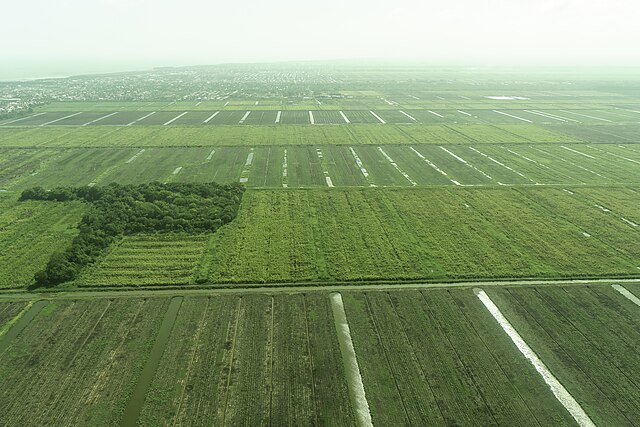
Former South American sugar capital, Guyana, is chasing waning production glory by building a white sugar factory in January 2026.
The US$20-million Demerara Sugar Refinery Inc (DSRI) at Wales will process a maximum of 100 tonnes per annum.
Although only a trickle compared to brown sugar, the additional white sugar will help meet growing demand in beverage industries.
According to the Minister of Finance Dr. Ashni Singh, the entire Caribbean Community and Common Market (CARICOM) utilizes 200,000 tonnes of white sugar annually.
CARICOM member, Guyana, imports 15,000 tonnes of white sugar worth over US$13.5 million annually, depending on reigning prices.
Cutting this reliance is among the reasons why SUCRO Ltd from the United States and GAICO Construction are building DSRI factory.
Although the government has hailed this private venture by enabling ease of establishment, it has no financial stake in it.
The sugar workers union known as GAWU in its part has welcomed the project, the kind it has been championing since 2016.
Production White-out
2016 marked the decline of Guyana’s fabled sugar industry that since the 17th century had chiefly supplied the United States and Europe.
Annual production fell by 18.7% in 2015-16, even as traditional markets looked for other sources or alternative sweeteners. By 2022, production was down to 46,985 tonnes, according to the Food and Agriculture Organization (FAO).
The Guyana Sugar Corporation (GuyCuCo) suffered the blunt of this historical output retreat for it incurred debts.
A University of Guyana report cites GuyCuCo’s debt at 82 billion Guyana dollars ($386.9 million) in 2015 due to production contraction.
The government initially came to the rescue by reducing processing efforts in sugar estates at Wales and Skeldon.
Hence, the upcoming white sugar factory may not reclaim former production glory in Guyana but will refocus the industry. The stats below offer a general preview of the historical industry landscape.
Guyana Sugar Statistics
Guyana was once a fabled sugar capital of the Caribbean where thousands of workers, including immigrants, used to work. It used to produce over 340,000 tonnes of sugar from over 113,474 acres in its best years. By 2018, production was down to 100,000 tonnes, which more than halved by 2022. The below FAOSTAT table illustrates production in the early 2020s.
| Year | Production [tonnes] |
| 2022 | 46,985 |
| 2021 | 58,148 |
| 2020 | 88,868 |
| 2019 | 92,154 |
Which were the key markets of Guyana’s sugar?
Before 1990, Guyana used to give its sugar a protected market product status into the markets of Europe and the United States. For half a century, 50% of export volumes and 70% of turnover used to come from Europe. Then this changed post-1994 when in a single fiscal year profits plummeted by 4 billion Guyana dollars ($19 million). This was partially due to the onset of alternative sweeteners in the U.S., which turned to domestic raw materials like corn syrup.
How does Guyana utilize brown and white sugar?
Brown sugar makes not only raw sugar but sugar sticks and other value added products while white sugar sweetens drinks. As of 2024, Guyana was importing around 15,000 tonnes of white sugar to meet its internal demand in the beverage sector.