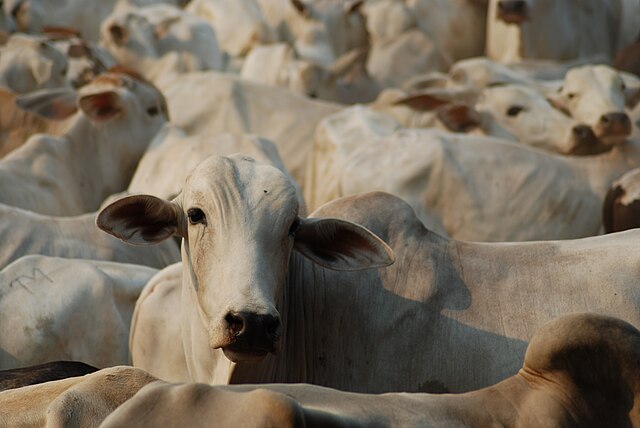
Pará state in northern Brazil’s Amazon delta has pushed its January 1, 2026 cattle tracking deadline to 2030, displeasing environmentalists.
Reuters quoted the state government stating on December 3, 2025 that bovine and buffalo identification can newly begin December 31, 2030.
State ranchers can therefore postpone putting ear tags on their 26 million-strong herd, unless by private choice.
They also no longer need make their animals fully digitally traceable by the previous deadline of January 1, 2027.
Pará’s government linked the move to mounting costs, technical difficulties and cattle producer activism for a reasonable grace period.
While farms are celebrating the decision, environmentalists and logistic companies are registering disappointment.
The Amazon Basin is a confluence of road/water transport connecting live cattle for sale between pastures and the port of São Paulo.
Transporters permeate various border states to reach ports, sometimes coping with quarantine delays for lack of Guia de Trânsito Animal (GTA) certificates.
With tags, such delays would be negligible, hence the feeling by transporters that tagging ought to have begun early 2026.
GTA certificates could have expedited logistics and prevented fines amounting to 5,000 Brazilian reais ($942) a head.
Amazon Deforestation ‘Beef’
But it is conservationists who most bear the blunt of the decision because the Amazonian herd has associations with deforestation.
Brazil often draws accusations of fostering illegal ranches on forestland to accommodate commercial herds and sometimes rare breeds like Nelore.
For this reason, non-governmental organizations are saying the latest tagging postponement taints Brazil’s COP30 host status in 2026.
Meat multinationals in Pará are however toeing the line to maintain credibility in deforestation-sensitive markets like the European Union (EU).
Two of these include JBS and Marfrig, which might decide to maintain in-house digital traceability for their suppliers before 2027.
In any case, the Ministry of Agriculture of Brazil will ban movement of buffalo and cattle without digital traceability in 2033. With a herd rivaling the cattle population of Australia, Pará therefore has much at stake concerning cattle tracking, per the below stats.
Brazil Cattle Tracking Statistics
As the world’s top 3 cattle-rearing and top 2 beef-producing nation, Brazil has been fast-tracking cattle since 2023. As of September 7, 2025, the world’s largest meat entity, JBS, had distributed 123,765 ear tags in the Amazonian Pará state. Although the state government postponed tagging and digital tracking deadline from 2026/27 to 2030, some companies continue tracking. JBS promised to donate 2 million tags over an unspecified time.
Nature Conservancy is helping the tag delivery effort in conjunction with the government and meat companies. With a single ear tag costing around 9 reals ($1.7), not many smallholder farmers can afford them. Hence, the government seeks to foot the bill for farmers with less than 100 head on their farms.
At the heart of tracking efforts is the northern Brazil state of Pará. The state has the second largest cattle herd in Brazil at 26 million head after Mato Grosso. The reason it is under tracking pressure is because it sits on the environmentally sensitive Amazon forest where land is cheap.
How big is Brazil’s cattle industry?
The cattle industry of Brazil can be assessed from production, export and consumption approaches. In 2023, Brazil was rearing 194,365,000 head of cattle, 38,960,000 of which dairy, 55,280,000 beef and 48,000,000 calves. The country ranks as a top-2 biggest beef exporter, supplying 1 in every 5 pounds of worldwide commercial beef. Export volumes in 2023 reached 3,350,000 tonnes, equal to 30% of production. The rest goes to home consumption at the rate of 7.3 million tonnes annually, as of 2022.