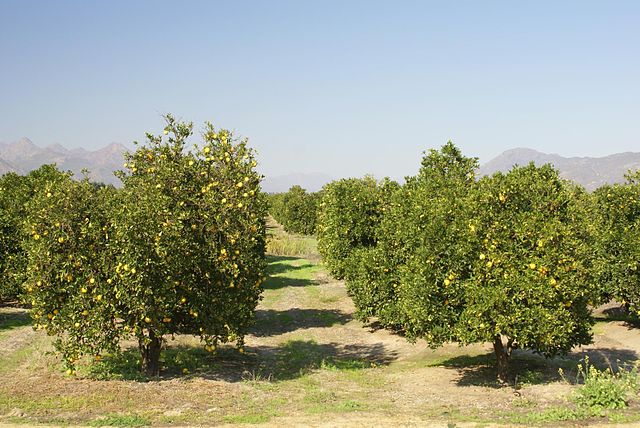
Robust international demand, efficient logistics and novel varieties helped South Africa up citrus exports by 22% year-on-year by October 2025. The opportune sales did not absorb the U.S.’ tariff effect, however, according to the Citrus Growers Association (CGA) on November 10, 2025.
The CGA recorded shipments at 203.4 million 15-kg cartons in 2025, which topped 2024’s 165 million cartons.
Conversely, this equals 3.05 million tonnes, the first time the world’s number 2 citrus shipper has surpassed 3 million tonnes.
The CGA offered no sale breakdown for 2025 but most shipments usually go to Europe (36%), based on 2024 export data.
Varieties and Unfelt Tariffs
On the positive side were rising varietal sales but on the negative side is the yet-to-register effect of U.S.’ tariffs.
Valencia and Navel oranges (Citrus sinensis) exports hit 1.39 million tonnes, constituting 45% of all citrus exports.
Following suit were mandarins with 26.3% share, ahead of lemons at 20.3%, with grapefruit coming fourth.
The seasonal exports coincided with maturing juvenile orchards from recent years and fair weather that supported production.
Demand from Europe’s fruit processors at a time when the northern hemisphere’s supplies had ended early also aided SA’s sales.
One northerly instance is Florida, which experienced production fall by 90% between 2017 and 2024, versus the 1990s, courtesy hurricanes.
Speaking of the United States, its 30% additional tariff on South Africa in August 2025 is yet to show effects.
The CGA’s Chief Executive Boitshoko Ntshabele told the media on November 10, 2025 that effects might fully register in 2026.
Ntshabele opined that South Africa must expedite brokerage of trade with the United States lest the duty harmed the sector.
Although SA only ships 5 to 6% of its citrus to the U.S., it earns a lucrative $100 million from exports. As such, the data below illustrates citrus trade by South Africa on a global scale.
South Africa Global Citrus Export Statistics
South Africa is the world’s number 2 biggest exporter of citrus after Spain. The country earns between 28.3 billion Rand ($1.65 billon), as of 2022 and 33.9 billion Rand ($1.8 billion), as of 2023, from exports. This is per the National Agricultural Marketing Council (NAMC). 44% of the export revenue emanates from the European Union (EU) while 33% from the Middle East. The Americas and Africa tail off at 12% and 2%, respectively (all 2023 values).
In terms of trade region growth, the Middle East and Asia have had the most phenomenal performance. In the 2013-23 decade, exports to these twin markets rose by 231%. SA’s citrus export revenue from these destinations soared from 2.7 billion Rand ($157.6 million) in 2013 to 11.3 billion Rand ($659.5 million) in 2023.
Oranges are the most important citrus fruits in South Africa by export share. Navels and Valencia oranges, for example, accounted for 45% of 2025’s citrus exports. Next are mandarins at 26.3% and lemons at 20.3% – all 2025 export season representations.
What is the long-term effect of U.S.’ tariffs on citrus growers?
The United States makes up 41% of all citrus exports by South Africa to the Americas. In 2023, the U.S.-bound exports were worth 4.1 billion Rand ($239.3 million). For this reason, trade tariffs there constitute a long-term threat. Analysts cite that the 30% tariff could affect the 35,000 jobs that depend on the sector in especially the Northern and Western Cape.